

You can return any time by using the sub-menu at the top of your screen.

Share this


Installing Pavers Over Concrete
Installing pavers over concrete can be a beautiful solution for upgrading tired outdoor spaces without a full tear out. With proper planning and a focus on drainage, you can transform an existing concrete patio, pool deck, walkways, or even certain low speed driveway areas. The key is confirming that the existing concrete slab provides a solid base, then adding the right bedding and jointing materials so the new paver surface performs well under foot traffic.
When It Makes Sense
Choose this approach when the concrete surface is structurally sound with no major cracks or active movement. Hairline cracks and light cosmetic wear are common, but wide gaps, heaving, or sections that rock indicate ground movement and a full rebuild with a compacted stone base is the better path for superior durability. Also check clearance at doors, steps, and the house perimeter. If adding height creates clearance issues, consider thinner individual pavers or remove and rebuild with crushed stone and gravel below grade.
Address Drainage First
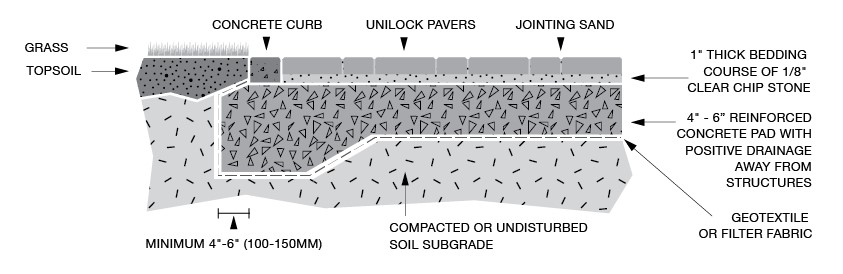
Poor drainage is the most common risk with pavers over concrete. Confirm that the slab already sheds water away from structures. If the underlying concrete is flat and shows water pooling after rain, create a way for water to escape. Contractors often add small drain holes through the slab in strategic locations, then place a thin free draining bedding layer over the top. The goal is proper drainage under the field so trapped moisture does not lead to uneven pavers, winter damage, or weed growth in joints.
Materials You Will Need
Have clean bedding sand or an approved chip alternative for a thin layer over the slab, high quality polymeric sand for joint sand, edging to install edging around open sides, and basic layout tools. If the new layout extends past the old slab, build that extension over a compacted stone base so the entire outdoor surface has support.
Step by Step Guide
1. Evaluate the slab
Inspect the existing concrete for large cracks, hollow sounds, or sections that move. If you find major issues, rebuild with a stone base rather than overlay.
2. Clean and prep
Power clean the surface and let it dry. Remove paint, grease, and loose debris. Lightly grind high spots if needed to help lay pavers flat.
3. Plan the slope
Verify the slope drains away from the house. If the slab is flat, incorporate discreet drain holes and plan a free draining bedding layer so the new installation can drain properly.
4. Install edging
Where the field is not confined by a wall or step, install edging fastened mechanically to the slab or set on the adjacent compacted concrete base or stone base. Good edges prevent lateral creep and potential tripping hazards.
5. Place the bedding layer
Spread a consistent thin layer of sand or approved chips. Screed to a uniform thickness so the finished elevation meets doors and transitions smoothly.
6. Begin laying
Lay pavers from a straight reference line. Keep joints even and tight. For borders near open edges, cut to fit and seat units carefully so the finished surface reads level.
7. Compact and fill joints
Compact with a protective mat and sweep in polymeric sand to fill all joints. Lightly mist to set the product as directed. Proper jointing reduces weed growth and locks the field.
8. Final checks
Walk the area to find any rocking units and correct them with minor bedding adjustments. Confirm water moves off the field and no pockets remain.
Costs and Considerations
Using a sound existing concrete slab can reduce labor and material costs compared to full excavation, which many homeowners find cost effective. However, do not compromise on drainage. If the slab cannot be made to drain properly, rebuilding on a proper stone base will save headaches in the long run. Remember that individual pavers are easily replaced if one becomes stained or damaged, which adds value over a monolithic pour.
Choosing the Right Pavers
Select concrete pavers or natural stone rated for overlay applications and suited to your aesthetic preferences. Match thickness to your elevation limits, and consider texture for slip resistance on wet areas like a pool deck. A coordinated color and border can refresh curb appeal while keeping maintenance simple.
With thoughtful assessment and a clear installation process, installing pavers over concrete can be a convenient way to upgrade a dated concrete patio into a durable, attractive surface that complements your home and landscape. A Unilock Authorized Contractor can help to answer your questions and help start your project today.
Related
Articles
We’re Here To Help
We make it easy to get inspired, plan, and start your project.

See our Catalog of Dreams
Explore ideas, spark inspiration, and see our full range of Unilock products.

Get your freeestimate today
Partner with a Unilock Authorized Contractor for best-in-class results.

Plan your dream project beautifully
Excited to start a new project? Get our Project Planning Guide and plan with ease.